
The name on this tube promises a lot. Rapid Wrinkle Repair is the kind of phrase a marketing team arrives at after focus-grouping a dozen options, and it works, because 24,558 people have bought this cream on Amazon alone. But I am a former esthetician, and I have watched enough clients return products in frustration to know that the gap between what a box says and what a product does in the real world is where most of the trouble lives. This is my honest take on the Neutrogena Rapid Wrinkle Repair Retinol Eye Cream, written specifically for the things other reviews tend to skip.
I am not here to tell you it is bad. It is not bad. It has real retinol, a formula built for the eye area, and a price that makes it accessible. What I want to do is give you the information that will help you decide if it is right for your specific situation, because the wrong eye cream purchased with the wrong expectations is money that will sit unused in your bathroom cabinet.
The Quick Verdict
A legitimate retinol eye cream that works for fine lines and mild crepiness over eight to twelve weeks. Worth buying if your expectations are calibrated correctly. Not worth buying if you are counting on it to lift, depuff, or visibly fade structural dark circles.
Amazon Check Today's Price →Retinol around the eyes without the sting and dermatologist markups? This tube has 24,000-plus reviews and a price that makes it easy to commit for the full twelve weeks it needs.
Check the current price for Neutrogena Rapid Wrinkle Repair Retinol Eye Cream on Amazon and read what verified buyers report after a full month of consistent use.
Amazon Check Today's Price on Amazon →What Nobody Mentions About the Name
The word rapid is doing a lot of work on that box, and the meaning Neutrogena intends is not the meaning most buyers bring to it. In clinical dermatology, rapid for a retinol product means faster than a comparable product without the accelerated delivery technology. It does not mean fast in absolute terms. Retinol, no matter the formulation, requires weeks of consistent use before the cell-turnover cycle it triggers produces visible surface changes. You will not see anything in week one. Most people will not see anything measurable until week six or seven.
I tested this on myself, applying it nightly for a full cycle, and I can tell you that by week three I had begun to doubt whether anything was happening. That doubt is normal. It does not mean the product is failing. The mechanism of retinol is deep, happening in the lower layers of the epidermis, and by the time you can see results at the surface, weeks of work have already been done. If you buy this expecting to notice a difference in two weeks, you will return it. If you commit to eight weeks of consistent nightly use, you will likely be glad you did.
The Stinging Problem and How to Avoid It
The single most common complaint in the one and two-star reviews for this cream is eye stinging. It is also the most preventable. The skin around the eye is four to five times thinner than the skin on your cheek, and any product applied close to the lower lash line will migrate slightly toward the eye during the night as your face presses into a pillow. If you apply this cream too close to the lash line, or use too much of it, you will wake up with irritated, watery eyes.
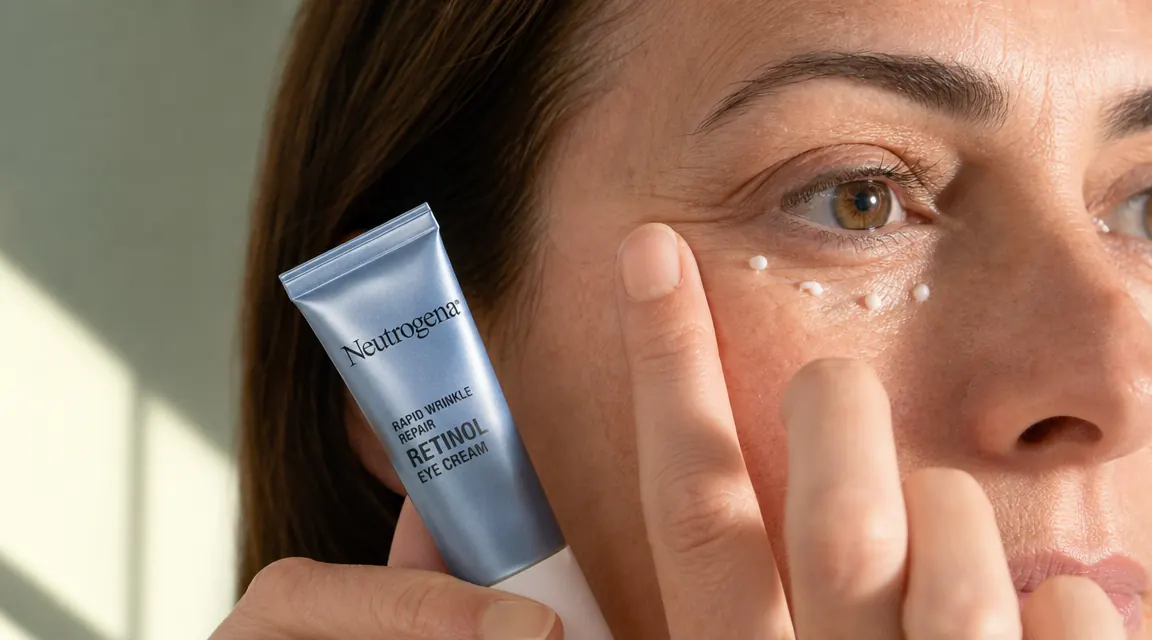
The correct application zone is the orbital bone, not the hollow directly under the lash line. Press your ring finger along the bony ridge beneath your eye socket and apply the product there, not on the soft tissue of the under-eye itself. Use no more than a grain-of-rice amount per eye. That is less than you think. Clients who came to me with irritation issues were almost always using a pea-sized amount for each eye, which is three to four times what this delicate area can handle.
If you have already tried this cream and experienced stinging, that does not automatically mean your skin cannot tolerate it. It may mean you need to adjust where and how much you apply, and introduce it every other night for the first two weeks rather than jumping straight to nightly use. Most of the people who call this cream irritating could use it comfortably with those two adjustments in place.
Dark Circles: Why This Cream Works for Some People and Does Nothing for Others
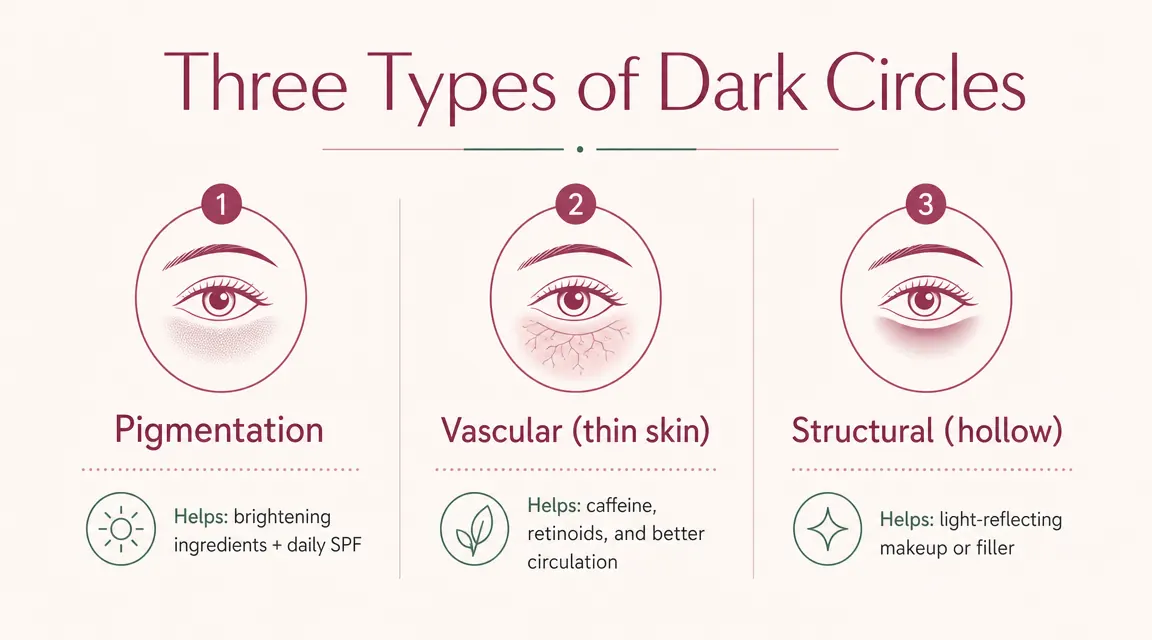
This is the part that frustrates me most about how this product is marketed and how most reviews cover it. Dark circles are not one problem. They are three different problems that happen to look similar, and the treatment that helps one type will do almost nothing for the other two. Buying an eye cream without knowing which type you have is like taking allergy medicine for a cold. You might get lucky, but usually you will not.
The first type is pigmentation-based dark circles. These are brown or tan in color and show up most often in deeper skin tones or on people with a history of sun exposure or eczema around the eye area. They are caused by excess melanin in the skin itself. Retinol can support cell turnover in a way that gradually addresses this type over a long consistent period, though it works slowly. Products with niacinamide or kojic acid tend to work more directly on pigmentation.
The second type is vascular, the bluish-purple circles you see when thin skin allows blood vessels to show through. This is especially common in fair-skinned people and those who are chronically tired or low on iron. Retinol may help marginally here over many months by gradually supporting skin thickness, which reduces how visible underlying vessels are. The effect is real but modest.
The third type is structural, caused by the hollowing of the tear trough area that comes with volume loss over time. This creates a shadow, not a pigmentation change or a vessel visible through the skin, just a geometric shadow cast by the recession of tissue. No topical product changes this. Filler or professional treatment is the only option that addresses the cause. I want to be direct about this because it is the most common dark circle type in people over 35, and it is also the one most likely to prompt someone to buy an eye cream and feel disappointed when nothing happens.
Yes, There Is a Smell
Fewer than five percent of the reviews I read before testing this cream mentioned the fragrance. Most of the people I have recommended it to bring it up within the first week. The formula contains fragrance, and it has a slightly floral, almost soapy note that some people find pleasant and others find off-putting close to their nose and eyes at bedtime. I am not in the camp that finds it bothersome, but I am also not the person who needs to like it.
If you have a fragrance sensitivity, even a mild one, this is worth knowing before you buy. The scent is light enough that most people habituate to it after a few nights, but it is present and it is close to your face when you apply it. For people with genuine fragrance allergies or chronic eye sensitivity, a fragrance-free retinol alternative would be the more conservative choice. If scent is not a concern for you, it will not affect performance.
Dark circles are not one problem. They are three different problems that look similar, and the treatment that helps one type will do almost nothing for the other two. Knowing which type you have before you shop changes everything.
The Plateau Most Long-Term Users Hit
Here is something I have never seen addressed in a drugstore eye cream review: retinol results tend to plateau. The improvements you see in months two and three, smoother texture, softer-looking fine lines, more even tone, are real and measurable. But somewhere between month four and month six, most people using this cream at its current retinol concentration will stop seeing additional change. This is not a product failure. It is a retinol concentration ceiling.
Over-the-counter retinol products occupy the lower end of the vitamin A potency scale. They work, but they have limits. If you are seeing results plateau and want to continue improving, your realistic options are to add a dedicated higher-concentration retinol serum to the rest of your face routine, consult a dermatologist about prescription-strength retinoids, or accept that you have reached the best this concentration can do for your skin type and maintain from there. None of those outcomes are failures. Most people are happy with the plateau level. But knowing it exists means you go in with better information.
How It Layers, and Where It Does Not Play Nice
If you use a vitamin C serum, a peptide moisturizer, or a niacinamide product elsewhere on your face, you need a clear application order when you reach the eye area. Retinol and certain other actives used simultaneously on very thin skin can increase irritation risk. My recommendation, and the one I gave clients for years, is to keep the eye area simple at night: cleanser, then this cream on the orbital bone, then whatever richer moisturizer you use on the rest of your face applied from the cheek upward, stopping short of the eye zone. Do not layer vitamin C or acids over or under a retinol eye cream.
Daytime layering is a different issue. This cream contains SPF 15, which Neutrogena positions as a benefit for morning use. In practice, SPF 15 is not meaningful sun protection for any significant outdoor exposure. More importantly, if you are already wearing a dedicated face sunscreen at SPF 30 or higher, the eye cream's SPF is redundant. I kept mine as a strictly nighttime product throughout my testing, which is also how most dermatologists recommend using retinol, since it is not photostable and sunlight degrades it quickly.
One texture note: if you use a very rich occlusive eye cream as your final step, or a heavy overnight sleeping mask on the full face, applying this retinol cream underneath that layer can trap the retinol and increase its penetration in a way that causes unexpected irritation. Thin layers in the eye area are always the right call. If your skin runs dry at night, a light patting of plain hyaluronic acid serum over this cream is the safer approach than a heavy occlusive.
Is the Price Actually Worth It Compared to Higher-End Alternatives
At its current price point, this tube lands in budget-to-mid territory for retinol eye creams. The higher-end alternatives, products from SkinCeuticals, Revision Skincare, or Jan Marini, cost two to four times as much per tube. The question I get most often from clients who are considering the upgrade is whether the premium products work meaningfully better.
The honest answer is: sometimes, for some people. Higher-end formulas often pair retinol with peptide complexes, growth factors, or encapsulated delivery systems that reduce irritation while maintaining effectiveness. Some people with sensitive skin find that a more expensive formula they can tolerate consistently outperforms a cheaper one they have to skip several nights a week due to irritation. But for someone who tolerates this Neutrogena formula without issue and is seeing results in the eight-to-twelve-week window, there is no guarantee a pricier product will produce proportionally better outcomes.
Where the calculus changes is consistency. The biggest driver of retinol results is not the potency of any single night's dose, it is the accumulation of consistent nightly application over months. A product at a price you can maintain buying without resentment will outperform an expensive product you ration. If this price point means you will commit to a full tube and start a second one, that matters more than the formulation comparison.
What I Liked
- Genuine retinol in a concentration the eye area can handle without a prescription
- Accessible price makes it easy to commit for the full twelve weeks the ingredient requires
- Light finish that sits under concealer without pilling or beading
- Works well for fine lines and mild crepey texture when applied correctly on the orbital bone
- Pump or tube packaging limits air exposure compared to open jars
- Widely available, consistent formula from batch to batch
Where It Falls Short
- Contains fragrance, which sits close to the eye and may bother sensitive noses or reactive skin
- Name implies speed that the ingredient mechanism cannot support, leading to returns
- Does nothing for structural or volume-loss dark circles, which is the most common type in people over 35
- SPF 15 is too low to be meaningful sun protection and may create false confidence
- Results plateau at an OTC retinol concentration level, typically around month four to six
- Irritation is common when applied too close to the lash line or in too large a quantity
Who This Is For
This cream is a good fit for someone in their mid-thirties through mid-fifties who is dealing with fine lines at the outer corners of the eye, a crepey or slightly uneven texture along the lower lash line, or vascular-type dark circles in fair or medium skin tones. It is also well-suited to anyone who has never used retinol near the eye area and wants to start with a concentration that carries a low risk of significant irritation if introduced slowly. If you know your dark circles are primarily pigmentation-based, this is worth trying on a sustained basis with realistic patience. And if cost is a factor in whether you will actually stick with something for the required weeks, this price makes the commitment feel low-stakes.
Who Should Skip It
Skip this cream if your primary concern is structural dark circles from volume loss, because no topical product will address the underlying cause. Pass on it if you have a fragrance sensitivity and strong eye reactivity, because the scent and proximity to the eye will likely cause irritation before the retinol can do any work. If you are pregnant or nursing, skip retinol in all forms until you have cleared it with your OB. And if you are looking for visible results faster than eight weeks, understand that the rapid in this name refers to something different than you may expect, and budget your patience accordingly. If you want to see how it compares to another popular drugstore retinol option before committing, our comparison of the Neutrogena and RoC retinol eye creams covers the key differences in formula, texture, and price. For a broader primer on how the right eye cream addresses different concerns through different mechanisms, the breakdown in our piece on 10 reasons eye cream reduces dark circles is worth reading before you settle on a format.
If your expectations are calibrated to eight-plus weeks and fine lines are your main concern, this is one of the most consistently rated retinol eye creams at this price.
Check the current price for Neutrogena Rapid Wrinkle Repair Retinol Eye Cream on Amazon and see what buyers who stuck with it for a full tube report about their results.
Amazon Check Today's Price on Amazon →