

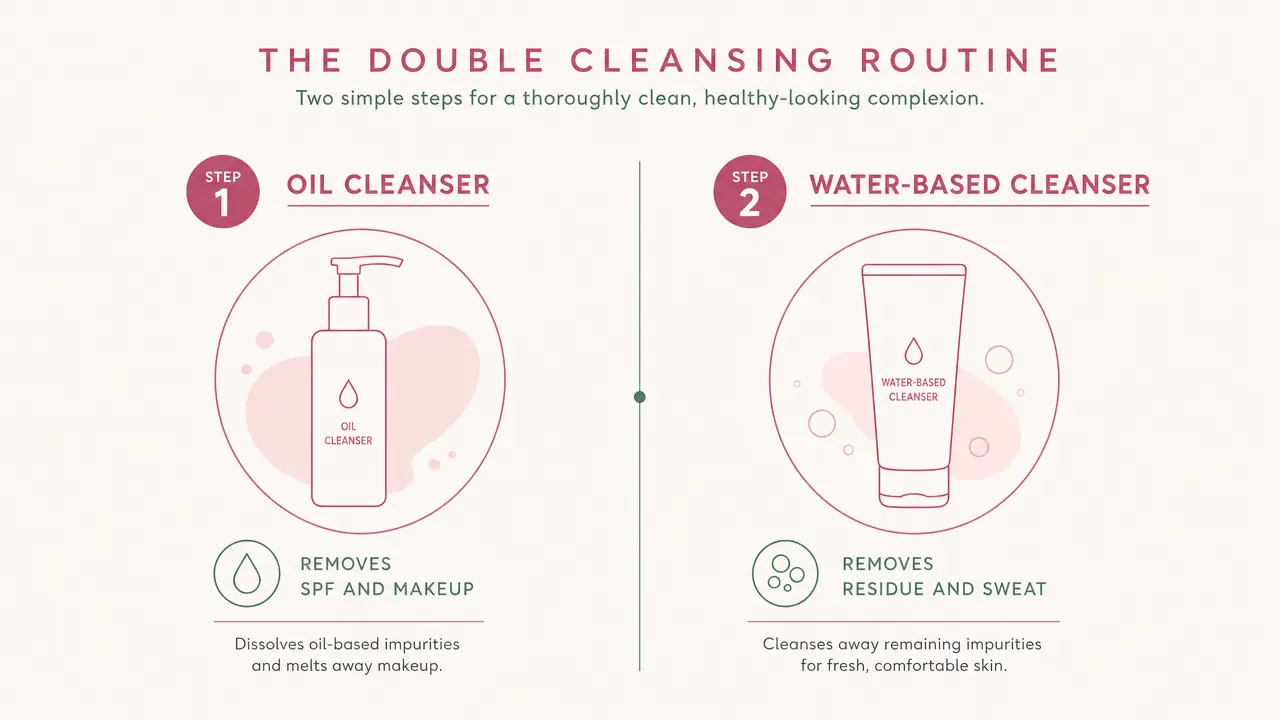
If you wear sunscreen every day, and I hope you do, a single rinse-off cleanse at night is not getting it fully off. SPF formulas, especially mineral ones with zinc oxide, are designed to be water-resistant. A water-based cleanser alone can leave a film of it sitting on your skin all night, underneath your serums and moisturizer, where it blocks absorption and sometimes contributes to congestion. Double cleansing solves that problem. The catch is that most double cleansing tutorials are written for oily or combination skin, calling for foaming cleansers and micellar water that can leave sensitive or dry skin feeling tight, itchy, or irritated. I spent several years as an esthetician before I started reviewing products independently, and the number of clients I saw who had over-stripped their barriers doing a double cleanse the wrong way was significant. This guide is the version that actually works for sensitive and dry skin types.
The method is straightforward once you know which products to pair. You will use a gentle, emollient first cleanser to lift sunscreen, makeup, and oil-based debris, then follow with a mild water-based cleanser to clear anything left behind without pulling hydration from your skin. The CeraVe Hydrating Facial Cleanser is the water-based second step I recommend most consistently. With 130,799 Amazon ratings averaging 4.7 stars, it has a track record most cleansers can only aspire to, and the formula, built around hyaluronic acid and ceramides, is one of the few I have seen hold up across both oily and sensitive skin types without any adjustment.
Your second-cleanse step is doing most of the barrier work. Make it count.
CeraVe Hydrating Facial Cleanser (ASIN B00D7BZJ3C) is the second-step cleanser I reach for after an oil or balm first cleanse. Non-foaming, ceramide-loaded, and gentle enough for reactive skin. Check the current price on Amazon before you commit to anything else.
Amazon Check Today's Price on Amazon →Step 1: Choose the Right First Cleanser for Your Skin Type
The first cleanse removes sunscreen, makeup, and sebum that has mixed with environmental debris throughout the day. For sensitive or dry skin, the product you choose for this step matters more than people realize. Avoid micellar water as your first cleanse if your skin is reactive. Micellar solutions contain surfactants that need to be rinsed off, and most people just wipe and move on, which leaves those surfactants sitting against the skin. That lingering residue is exactly what causes the burning sensation some people associate with micellar water.
Instead, reach for a cleansing balm, a cleansing oil, or a very low-surfactant cream cleanser. Balms are generally the most forgiving for reactive skin because they emulsify with water when you rinse and do not require any rubbing or pressure. Look for formulas that list mineral oil, caprylic/capric triglyceride, or a plant-based ester as a leading ingredient. Avoid balms with heavy fragrance, essential oils, or alcohol high on the ingredient list. Apply the first cleanser to completely dry skin, work it in circles for about thirty seconds to loosen sunscreen and makeup, then emulsify with a small amount of lukewarm water before rinsing fully.
One timing note: do not rush this step to under twenty seconds. SPF and long-wear makeup need contact time with an emulsifying product to actually lift. A slow, gentle thirty-second massage with a balm or oil removes far more than an aggressive ten-second scrub.
Step 2: Follow with a Non-Foaming Water-Based Cleanser
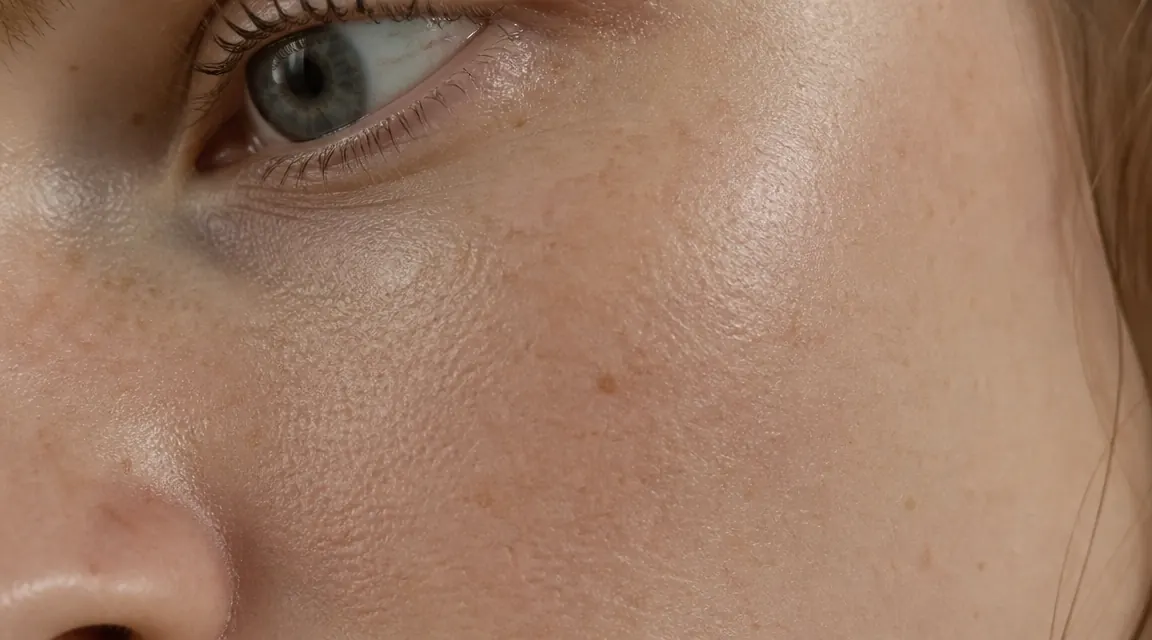
After rinsing off the first cleanse, your skin should feel comfortable, not tight. Now you apply the second cleanser, the water-based step, to remove any residual oil cleanser emulsion, sweat, and water-soluble debris. This is where sensitive-skin routines most often go wrong. People grab a foaming cleanser for this step because it feels thorough, but high-foam formulas typically rely on sulfates or strong surfactants that strip the skin's natural moisture layer. After a first cleanse, your skin is already a bit more vulnerable. A harsh second step will push it into that tight, raw-feeling state that takes hours, or overnight, to recover from.
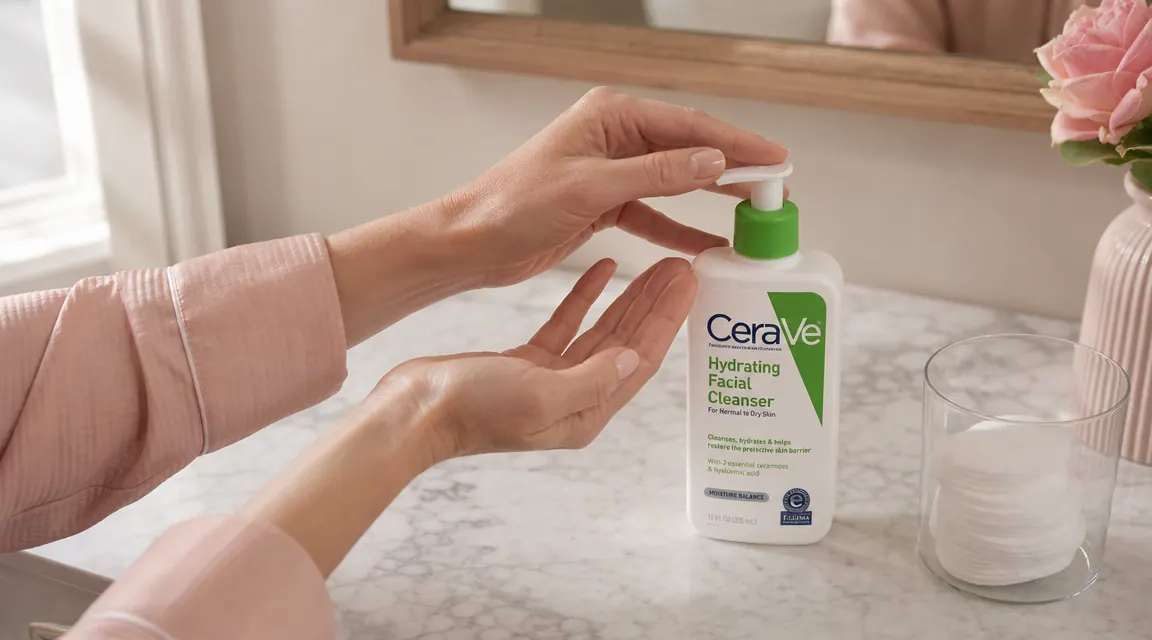
The CeraVe Hydrating Facial Cleanser is exactly what this step calls for. It is a non-foaming, lotion-type cleanser that uses a very mild surfactant system alongside hyaluronic acid and three essential ceramides. Ceramides are lipids that naturally exist in the skin barrier. Using a cleanser that includes them in the formula means your second-cleanse step is doing gentle barrier reinforcement rather than stripping. Apply a small pump, work it over damp skin in gentle upward circles, and rinse thoroughly with lukewarm water. You should finish this step feeling clean but not dry. If you feel any tightness after rinsing, your water is too hot or you are using too much product.
Step 3: Mind Your Water Temperature and Rinse Time
This step sounds simple and gets skipped in most guides, but water temperature is one of the most underrated variables in a cleansing routine. Hot water feels satisfying. It also disrupts the lipid layer at the skin's surface, temporarily loosening the tight-junction proteins that hold barrier cells together. For people with already compromised or reactive skin, cleansing with water that is too hot repeatedly contributes to chronic redness, dehydration, and sensitivity that no serum or moisturizer can fully correct as long as the washing habits do not change.
The target is water that feels comfortably warm, not hot. If you have to ease into it or adjust after contact, it is too warm. Cold water is not ideal either. It does not effectively rinse away the emulsified first cleanser, and it can cause capillaries just below the skin surface to contract in a way that contributes to visible redness in people prone to rosacea. Warm and comfortable is the goal for both cleansing steps. Rinse each step for at least fifteen to twenty seconds to ensure no cleanser residue remains, which is another common cause of sensitivity and milia.
If your skin feels tight the moment you pat it dry, the problem is almost always water temperature or surfactant strength, not the double cleansing method itself.
Step 4: Pat Dry and Apply Your First Serum or Treatment While Skin Is Still Damp
The way you dry your face after cleansing affects how well your next products absorb and how quickly the skin rehydrates. Rubbing a towel across your face creates friction on skin that is temporarily more permeable after washing. Over time, habitual rubbing contributes to barrier breakdown and can worsen sensitivity in people already prone to it. Instead, press a clean, soft towel gently against your skin and pat dry. Leave skin slightly damp, not dripping, before moving to your serum or first treatment step.
The reason for applying your next product to damp skin is absorption. A hyaluronic acid serum, for example, is a humectant that draws water toward itself. Applied to completely dry skin, it can pull moisture from deeper layers of the dermis if there is nothing available at the surface. Applied to slightly damp skin, it locks that surface moisture in as the skin dries, which is the actual mechanism you want. This is also the window where niacinamide, peptides, and lightweight ceramide serums sink in most efficiently. Do not wait longer than a minute after patting dry before applying your first treatment product.
Step 5: Do Not Skip Double Cleansing on Nights You Skip Makeup
This is the step people always want to shortcut, and it is the one I push back on most consistently. On days you do not wear makeup, the logic seems sound: nothing to remove, so one rinse should be fine. But unless you also skipped sunscreen that day, which you should not, you still have SPF on your skin. Many people also apply moisturizer, primer, or tinted SPF products in the morning that build up throughout the day and mix with sebum, pollution, and particulate matter from the air. A single water-based rinse will not fully emulsify that.
On no-makeup days, your first cleanse can be shorter and lighter. A small amount of a cleansing oil or balm worked in for fifteen seconds, rinsed, then followed by the CeraVe Hydrating Cleanser is entirely sufficient. The first step does not have to be a full production. It just needs to be there to handle the SPF. Think of it as a primer for your second cleanse rather than a separate event. Once this becomes a habit, you will notice a difference in how clearly your serums absorb and how consistently clean your skin feels in the morning without the slight congestion that can happen when sunscreen builds up over several days.
What Else Helps
Double cleansing gives your routine a better foundation, but a few supporting habits make the method more effective. Wash your pillowcase at least once a week. A clean cleansing routine can be partially undermined if you are pressing your freshly washed face into a fabric that has accumulated days of sebum, product residue, and shed skin cells. Switch to a fresh towel every two to three days for the same reason. If you wear a lot of eye makeup, a separate dedicated eye makeup remover before your first cleanse can protect the delicate periorbital skin from excess rubbing. A saturated cotton pad pressed gently against each eye for ten seconds dissolves mascara and liner before the first cleanser even starts, which means less mechanical pressure on skin that is some of the thinnest on the face.
If you are dealing with active sensitivity, a compromised barrier, or a period of significant skin reactivity, consider scaling back to single cleansing in the morning and double cleansing only at night. Morning skin, unless you sweat heavily overnight, generally only needs a very gentle rinse or a quick pass with the second cleanser step alone. Saving the two-step method for the evening, when you are actually removing the day's SPF and environmental buildup, keeps your routine effective without adding unnecessary cleansing frequency. If your skin is particularly reactive, you may also want to check out the CeraVe Hydrating Facial Cleanser review where I walk through a full year of daily use across different seasons and skin states.
Still searching for the second-cleanse step that will not undo all the barrier work you just did?
The CeraVe Hydrating Facial Cleanser is the one I recommend most for sensitive and dry skin after the first cleanse. It is non-foaming, ceramide-reinforced, and rinses clean without that tight feeling that signals a stripped barrier. Over 130,000 Amazon buyers have left it rated at 4.7 stars. See the current price and what size is in stock today.
Amazon Check Today's Price on Amazon →